


WEEKLY GLOBAL MARKET REPORT
"10-Year Yield Hits 5.17%, a 19-Year High — Yet the Nasdaq Climbed 2%: Micron and Payrolls to Settle the 'Rates vs. AI' Tug-of-War"
The U.S. 10-year Treasury yield surged to its highest level since 2007, but chipmakers and megacap tech held the line, sending the S&P 500, the Nasdaq and South Korea's KOSPI to weekly gains. This week, Micron's earnings and the PCE and jobs data will test whether AI-driven profits can keep outrunning the rate shock.
Last week, yields hit a 19-year high and indexes still rose — carried by a handful of giants.
Major Index Performance
The S&P 500 rose 1.21% on the week, from 7,650.50 to 7,743.41, while the Nasdaq Composite gained 2.06% to 27,068.72 from 26,522.55 (Sources: Yahoo Finance, Stock Market News for Sep 18, 2026; TheStreet, Stock Market Today (Sept. 25, 2026)). The Dow added 0.28% to 51,828.62, snapping a three-week losing streak (Source: Yahoo Finance, Dow, S&P 500, Nasdaq notch weekly wins). Beneath the surface, though, breadth was poor: the equal-weight S&P 500 actually fell 0.6%, with rate-sensitive utilities, real estate and financials leading the decline (Source: Fear-Price, Sep 21 to 25 Weekly Review).
Wednesday was the turning point. A hotter-than-expected S&P Global September PMI and a 5-year Treasury yield topping 5% for the first time since 2007 knocked the S&P 500 down 0.75% to 7,706.03 (Source: TheStreet, Stock Market Today (Sept. 23, 2026)).
Korean equities traded only three sessions before the Chuseok (Korean Thanksgiving) holiday. The KOSPI reclaimed the 7,000 mark on the 21st on a Samsung Electronics rally (Source: The Asia Business Daily, KOSPI closes at 7,007.72) and closed at 7,080.92 on the 23rd, up 2.71% for the week; the tech-heavy KOSDAQ gained 2.10% to 844.48 (Source: Money Today, KOSPI closes in the 7,080s ahead of holiday).
Technical Analysis
The S&P 500 held above its 50-day moving average — pegged between roughly 7,630 and 7,670 depending on the data provider — preserving its short-term uptrend, with ample room above the 200-day line near 7,200 (Source: Investing.com, S&P 500 Technical Analysis). Wednesday's low near 7,700 marks first support, while the 7,750–7,770 zone just above Friday's close is the resistance to clear.
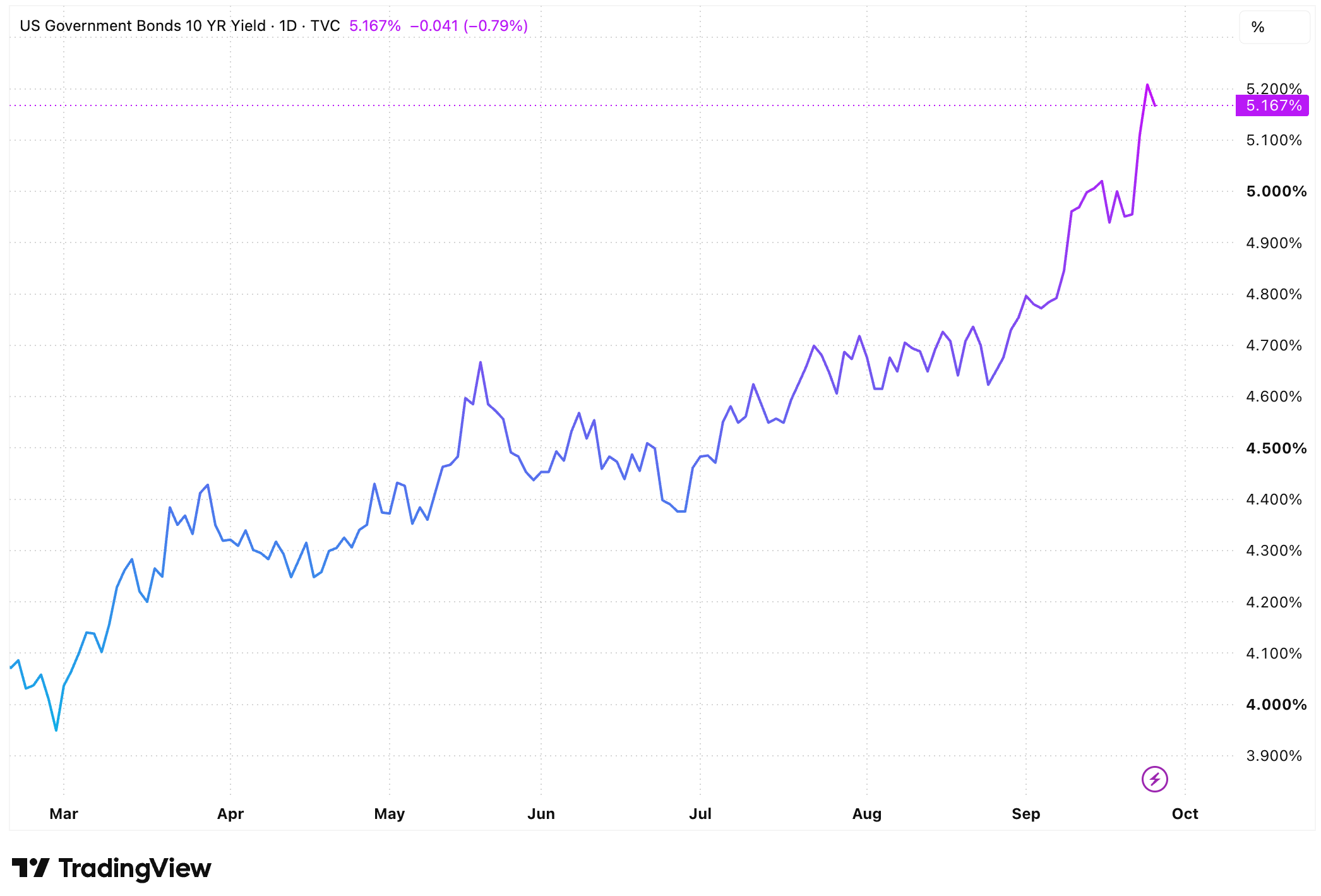
The 10-year yield climbed from 5.00% to 5.17%, up 17 basis points on the week. It touched 5.225% intraday on Thursday and closed that day at 5.21% before easing on Friday as oil fell (Sources: TradingEconomics, US 10-Year Treasury Yield; TheStreet, Sept. 25 live blog).
Strikingly, the VIX barely moved, edging from 14.81 to 14.87 (Source: Portfolio Terminal, VIX Today). The MOVE index of bond volatility, by contrast, rose 19% on the week, and the Fear & Greed Index improved from 30.4 to 37 but remained in "fear" territory (Source: Fear-Price) — bond markets, not equities, are doing the worrying.
Oil slid after Iran offered to reopen the Strait of Hormuz within seven days if its conditions were met, with WTI settling at $92.41, down about 7.9% on the week (Sources: Yahoo Finance and TheStreet, Sept. 25).
The Korean won strengthened, with USD/KRW closing at 1,358.40 on the 23rd, down 24.9 won from the prior week (Source: Money Today, USD/KRW at 1,358.4).
This week, Micron's earnings and the September jobs report will decide the 'rates vs. AI' contest.
Korean markets reopen today (Sept. 28) after the holiday and must digest the U.S. rate spike and chip rally in one go. The U.S. calendar runs from JOLTS job openings on the 29th, to PCE inflation, final Q2 GDP and Micron's post-close earnings on the 30th, the ISM manufacturing index on Oct. 1 (consensus 54.8), and September nonfarm payrolls on Oct. 2 (consensus 100,000 vs. 162,000 in August) (Source: The Rio Times, Key Market Events for the Week of September 28–October 2, 2026). With markets already pricing roughly a 70% chance of another hike in October (Source: TradingEconomics), each release can move the rate path. Also in focus: U.S. Trade Representative Jamieson Greer said details of the U.S.-China trade agreements reached around the Trump–Xi summit would be released Monday (Source: TheStreet, Sept. 25).
▲ Bull Case
If Micron guides above expectations and PCE and payrolls land near consensus, markets may read the economy as "strong but not overheating," letting the 10-year drift back toward 5.0–5.1%. That would favor an extension of the chip-led rally into Korea's large caps.
▼ Bear Case
Hot PCE and wage data could push the 10-year back above 5.2% while lifting October hike odds. And if Micron beats but hedges on guidance, a sell-the-news reaction could spread across semiconductors.
Positioning Takeaways
Indexes are holding up, but gains are concentrated in a narrow group of megacaps. Investors may want to review exposure to rate-sensitive sectors, and those heavy in semiconductors may prefer staggered entries around the Sept. 30 print, when volatility is likely to rise.
Key Charts
Fig 1: U.S. 10-Year Treasury Yield — From 5.00% to 5.17%, Highest Since 2007
source: tradingview.com
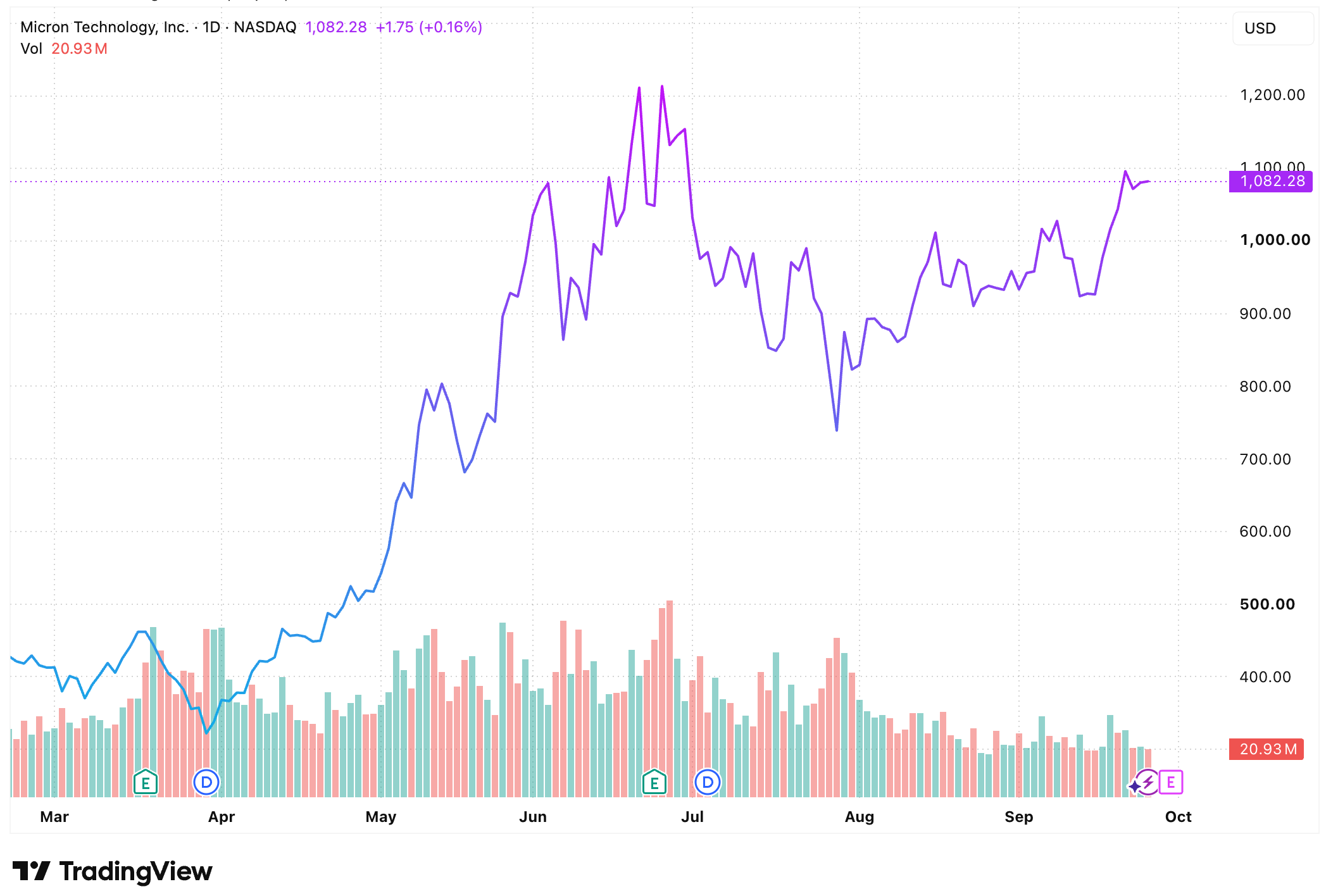
Fig 2: Micron (MU) — Up 6.5% Ahead of Sept. 30 Earnings, a Test for the Memory Supercycle
source: tradingview.com
Theme Spotlight
Micron's Print and the Memory Supercycle — The Next Hurdle for Samsung and SK Hynix
Chips lifted the indexes even as yields hit a 19-year high, and the reason is soaring memory prices driven by high-bandwidth memory (HBM).
Micron reports fiscal fourth-quarter results after the close on Sept. 30, with consensus at about $50.45 billion in revenue and $31.16 in earnings per share (Source: Investing.com, Micron earnings outlook). The same analysis notes that HBM supply for 2026 is fully booked and DRAM spot prices are up 52% since January. Korea's trade data confirm the trend: semiconductor exports for Sept. 1–20 jumped 259.4% year over year to $34.1 billion, accounting for 47.8% of total exports (Source: Money Today, Chip exports up 259.4%). The real focus, then, is guidance rather than the quarter itself — language on HBM pricing and demand durability could set the direction for Samsung Electronics (closed at 285,500 won on the 23rd) and SK Hynix (1,862,000 won).
Related ETFs/Stocks:
- SMH (VanEck Semiconductor ETF): A flagship ETF spread across chip leaders including Nvidia, TSMC and Micron; the semiconductor group rose about 5.9% last week (Source: Fear-Price).
- SOXX (iShares Semiconductor ETF): Broad exposure to U.S.-listed chipmakers, tracking memory, equipment and design together.
- SK Hynix: The leading HBM supplier and the Korean stock most directly tied to Micron's guidance and HBM pricing.
Risk Factors: High expectations are largely priced in, so even a beat could trigger sell-the-news selling. With leadership this concentrated, another spike in yields could also deepen any pullback.
Macro Dashboard
Last Week's Key Moves
| Indicator | Level | Change | Takeaway |
|---|---|---|---|
| S&P 500 | 7,743.41 | 7,650.50 → 7,743.41 (+1.21%) | Equal-weight index -0.6%; narrow leadership |
| Nasdaq Composite | 27,068.72 | 26,522.55 → 27,068.72 (+2.06%) | Led by chips and megacap tech |
| Dow Jones | 51,828.62 | 51,682.64 → 51,828.62 (+0.28%) | Snapped three-week losing streak |
| KOSPI | 7,080.92 | 6,894.23 → 7,080.92 (+2.71%) | Back above 7,000 in a holiday-shortened week |
| KOSDAQ | 844.48 | 827.12 → 844.48 (+2.10%) | Chip-equipment names rallied |
| U.S. 10-Yr Treasury | 5.17% | 5.00% → 5.17% (+17bp) | Highest since 2007; 5.21% on Thursday |
| VIX | 14.87 | 14.81 → 14.87 | Equity volatility subdued |
| Fear & Greed | 37 (Fear) | 30.4 → 37 | Improved but still fearful |
| WTI Crude | $92.41 | $100.30 → $92.41 (~-7.9%) | Hopes for Hormuz reopening |
| USD/KRW | 1,358.40 | 1,383.30 → 1,358.40 (-24.9 won) | Won strengthened (as of Sept. 23) |
Events to Watch This Week
✔︎ U.S. PCE Inflation & Final Q2 GDP (Sept. 30): The Fed's preferred inflation gauge; could shift the ~70% odds of an October hike
✔︎ Micron Fiscal Q4 Earnings (Sept. 30, after the close): Guidance and HBM pricing language to steer Korean memory stocks
✔︎ U.S. September Jobs Report (Oct. 2): Consensus 100,000 jobs, 4.2% unemployment; first payrolls print since the September hike
✔︎ U.S. ISM Manufacturing Index (Oct. 1): Consensus 54.8; a check on overheating after last week's hot PMI
※ This article was written based on the analysis of generative AI.
※ This investment market report is prepared for informational purposes only and should not be interpreted as a solicitation to buy or sell any specific investment product or as investment advice. The final investment decision and the resulting liability rest solely with the investor.


